
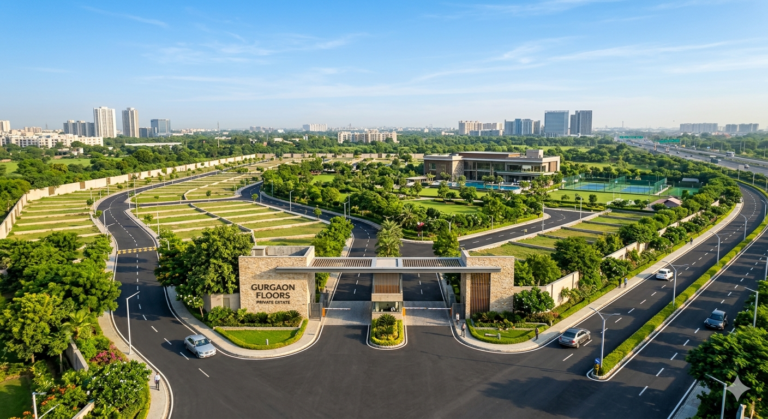
The Indian real estate landscape is witnessing a significant paradigm shift as investors move away from traditional high-rise apartments toward the autonomy of land. Consequently, plotted developments in India have emerged as the most resilient and high-performing asset class in the post-pandemic era. This surge is not merely a fleeting trend but a fundamental change in how Indians perceive homeownership and wealth creation. For those looking at a real estate investment in Gurgaon, plots offer a unique blend of high capital appreciation, low maintenance, and the creative freedom to build a bespoke lifestyle. This blog post explores why plotted developments are spearheading the next growth phase and how they are redefining the luxury market in 2026. By understanding these dynamics, you can better position your portfolio for the decade ahead.
Background
Historically, land has always been the preferred investment for Indian households; however, the lack of transparency and legal hurdles often deterred urban buyers. This changed with the implementation of the Real Estate (Regulation and Development) Act, which brought much-needed structure to the segment. According to recent market reports by the National Housing Bank (NHB), land prices in tier-1 cities have outperformed multi-storey apartment prices by a margin of nearly 15–20% over the last few years. In the local context, the Gurgaon market has been a pioneer in this shift. The launch of the Deen Dayal Jan Awas Yojna (DDJAY) and premium gated townships has institutionalized land buying. Today, institutional developers have replaced unorganized players, ensuring that every real estate investment in Gurgaon is backed by world-class infrastructure, clear titles, and planned sewage, electricity, and security systems. This professionalization has turned land into a “safe haven” asset.
The Forces Powering the Land Boom
The transition toward plotted land is driven by several socio-economic factors that prioritize privacy, flexibility, and long-term financial security. In 2026, we see four distinct pillars supporting this growth.
1. Unmatched Capital Appreciation Potential
While built-up structures begin to depreciate the moment they are occupied due to wear and tear, land remains a finite resource that consistently gains value. In Gurgaon’s high-growth corridors like the Dwarka Expressway and New Gurgaon, plots have shown a compound annual growth rate (CAGR) that significantly exceeds traditional equity or gold. Therefore, a real estate investment in Gurgaon involving land provides a much higher “alpha” for an investor’s portfolio compared to ready-to-move-in flats. The scarcity of land in prime sectors ensures that the demand-supply gap remains in the favor of the landholder.
2. The Flexibility of Bespoke Construction
Modern homebuyers no longer want “cookie-cutter” layouts provided by mass-market developers. Plotted developments allow owners to design their homes according to their specific needs—whether that includes a private home office, a terrace garden, or a multi-generational living setup. This “design-your-own-life” philosophy is a key driver for the luxury segment in 2026. Furthermore, the ability to build in stages allows for better cash-flow management for middle-income families.
3. Reduced Execution Risk and Lower Entry Costs
Compared to large-scale residential towers that can take 5–7 years to complete and are often subject to construction delays, plotted projects have a much shorter gestation period. Developers can deliver the basic infrastructure—roads, parks, and utilities—in a fraction of the time. For those starting their journey in real estate investment in Gurgaon, plots often require a lower ticket size compared to luxury villas, while offering a significantly faster exit strategy if they need to liquidate their assets.
4. Enhanced Security in Gated Townships
Modern plotted developments in India are no longer isolated patches of land. They are now developed as “Gated Communities” featuring 24/7 surveillance, clubhouses, swimming pools, and dedicated play areas. According to the Ministry of Housing and Urban Affairs, the demand for “organized land” is expected to grow by 30% annually as buyers seek the security of a flat with the freedom of a bungalow. This hybrid model has become the “sweet spot” for modern investors. Furthermore, the Reserve Bank of India has maintained a supportive stance on credit flow for residential plots, making financing more accessible than ever before.
How Gurgaonfloors Can Help You
At gurgaonfloors, we understand that buying land is as much an emotional decision as it is a financial one. Navigating the complexities of land titles, zoning laws, and developer reliability can be daunting for even the most experienced investor. Therefore, our team provides a curated portfolio of the finest plotted developments in India located right here in the NCR. Whether you are looking for a premium plot under the DDJAY scheme or an ultra-luxury plot in a Golf Course Road township, we ensure your real estate investment in Gurgaon is legally sound and positioned for maximum growth. We assist you through the entire process—from initial site visits and due diligence to architectural consultation for your future floor.
FAQs
Is it better to invest in a plot or a flat for ROI in 2026?
Statistically, land offers higher capital appreciation over the long term. While flats provide better immediate rental income, a real estate investment in Gurgaon through plots is generally superior for pure wealth creation.
Are plotted developments in Gurgaon RERA approved?
Yes, all major plotted developments, especially those listed on gurgaonfloors.in, are registered under Haryana RERA to protect buyer interests and ensure timely delivery of infrastructure.
What is the minimum size of a plot available in Gurgaon?
Under various government schemes like DDJAY, plots can start from approximately 100 sq. yards, while premium townships offer sizes ranging from 300 to 1,000 sq. yards.
Can I get a home loan for a plot?
Yes, most major Indian banks offer “Plot + Construction” loans, allowing you to finance both the land purchase and the building of your dream home.
Add a comment