
The City Squeeze and the Sanctity of Space
Remember the days when city living was all about proximity to office hubs, social prestige, and infinity pools? By 2026, the global pandemic and subsequent years of seasonal smog have permanently shifted the axis of urban value. In high-density megacities—where millions share air, sound, and a frantic pace—daily living has become a struggle for balance. The ultimate status symbol in 2026 isn’t a premium view; it is health-centric urban living.
We are now living in the era of the wellness-focused home. No longer a gimmick, these are sanctuaries specifically engineered to actively improve your physical health, mental resilience, and emotional well-being. This blog explores why “breathing homes” are a necessity, not a luxury, and how they transform your daily routine.
The Architectural Cure for the Urban Malaise
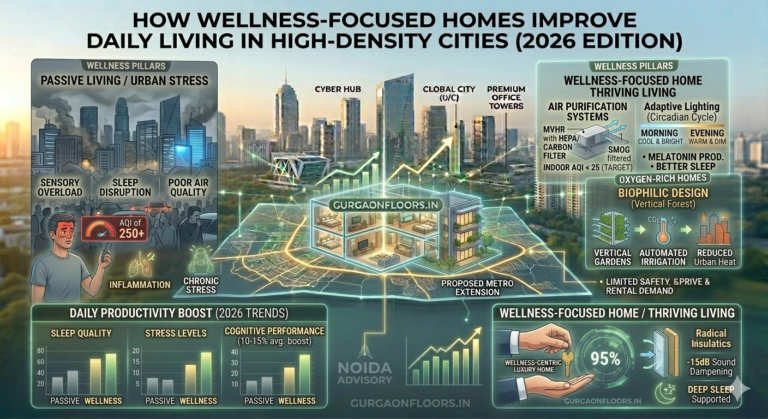
A standard apartment in a high-density city is a passive vessel. A wellness-focused home is a symbiotic partner. It addresses the invisible vectors of urban pollution—air, noise, light, and stress—using sophisticated engineering and intelligent design:
1. “Passive House” Principles and Air Quality (AQI) Active SCRUBBING
In cities where the outdoor AQI is a constant source of anxiety, the primary benefit of wellness real estate is absolute control over the air you breathe.
- Passive Design: Wellness homes use advanced airtight envelopes to prevent dust, PM2.5, and PM10 from infiltrating your space.
- Active Purification: They incorporate standard Mechanical Ventilation with Heat Recovery (MVHR) units combined with medical-grade HEPA and carbon filtration systems (similar technology shown in image_30.png). This ensures that indoor air is up to 5x cleaner than outdoor air, actively mitigating respiratory stress.
2. Biophilic Design: The Biological Mandate
Living in a concrete jungle can starve your brain of the sensory input it evolved to need. Biophilic design—integrating nature into architecture—isn’t just aesthetic; it is a neurological necessity.
- Vertical Forests & Green Pockets: Balconies and shared courtyards are transformed into “Vertical Forests,” automated with sustainable irrigation (image_28.png). These plant clusters actively absorb CO2, release oxygen, and reduce the surrounding temperature.
- Stress Reduction: Numerous 2026 studies show that daily views of greenery and water reduce cortisol levels (stress) and improve cognitive function within 15 minutes of exposure.
3. Circadian and Intelligent Lighting
High-density living often means limited natural light and constant exposure to disruptive blue light from devices and streetlights.
- Intelligent Lighting: Wellness homes are equipped with human-centric lighting systems. They track the sun’s cycle, automatically adjusting the light temperature (Kelvin) to be cool and bright in the morning (boosting alertness) and warm and dim in the evening (promoting melatonin production and better sleep).
4. Radical Acoustics and Soundscaping
The relentless hum of a city—traffic, construction, and sirens—is a significant driver of chronic stress and sleep disruption.
Comparative Advantage: The Wellness Upgrade (2020 vs. 2026)
| Metric | Standard High-Density Apartment (2020) | Wellness-Focused Home (2026) |
| Indoor Air Quality | Unfiltered, recirculation dependent | Multi-stage HEPA Filtered/Purified |
| Noise Levels (Avg.) | 45-55 dB (Frequent disruption) | 30-35 dB (Deep sleep supported) |
| Light Quality | Static/Manual Control | Circadian Adaptive (Automatic) |
| Mental Stress Index | High (Passively absorbed) | Lower (Active biophilic mitigation) |
| Sleep Quality | Disrupted/Inconsistent | Consistent Deep Sleep |
Case Study Hotspots for Wellness Real Estate (2026)
| City/Region | Specialization | Example Development Style |
| Delhi-NCR (Sohna/Gwal Pahari) | Air Quality & Gwal Pahari Green Belt | Low-Density Wellness Floors (image_30.png) |
| Dubai (Dubai Creek Harbour) | Blue Mind Amenities & Water Views | Ultra-Luxury ‘Well-Being’ Penthouses |
| Noida (Sector 150/Yamuna Expressway) | SCO Plots & Masterplanned Sports Cities | Wellness-Linked Mixed-Use Communities |
| Mumbai (Upper Worli) | High-Rise Biophilic Integration | LEED Platinum High-Rise with vertical forests |
How Gurgaon Floors Helps You Secure Your Sanctuary
At Gurgaon Floors, we recognize that your home in 2026 is your first line of environmental defense. Investing in high-density cities requires a specialized “Environmental Integrity Filter.”
- Environmental Audits: We perform independent air, light, and sound quality audits on all premium listings (image_24.png) before presenting them to our clients.
- Wellness ROI analysis: We help investors understand the rentability premium of wellness features, which is averaging 7%–12% in high-scarcity markets in 2026.
- Niche Wellness Listings: Our curated portfolios focus strictly on developers who prioritize “Passive House” and “WELL” certifications.
FAQs:
1. Is a wellness home significantly more expensive in 2026?
Initially, yes. Wellness integration typically adds a 10%–15% premium on construction costs. However, in 2026, the resale and rental market highly values these features, leading to higher long-term value and immediate health savings.
2. Does integrated air purification increase maintenance costs?
Slightly. While the system operates on passive design principles, filter replacement is mandatory (image_32.png). This is a vital ongoing cost for health security, much like water filtration.
3. Can I retrofit my existing urban apartment for wellness?
Partially. You can retrofit circadian lighting, high-end mobile air purifiers, and biophilic elements. However, achieving radical acoustic dampening and professional passive air scrubbing (MVHR) is extremely difficult without structural changes.
4. How does a wellness home improve daily productivity?
By ensuring deeper sleep, adaptive lighting, and reduced background noise, a wellness home minimizes sensory overload and fatigue, leading to an average 10%–15% boost in daily cognitive performance for remote workers.
Add a comment