
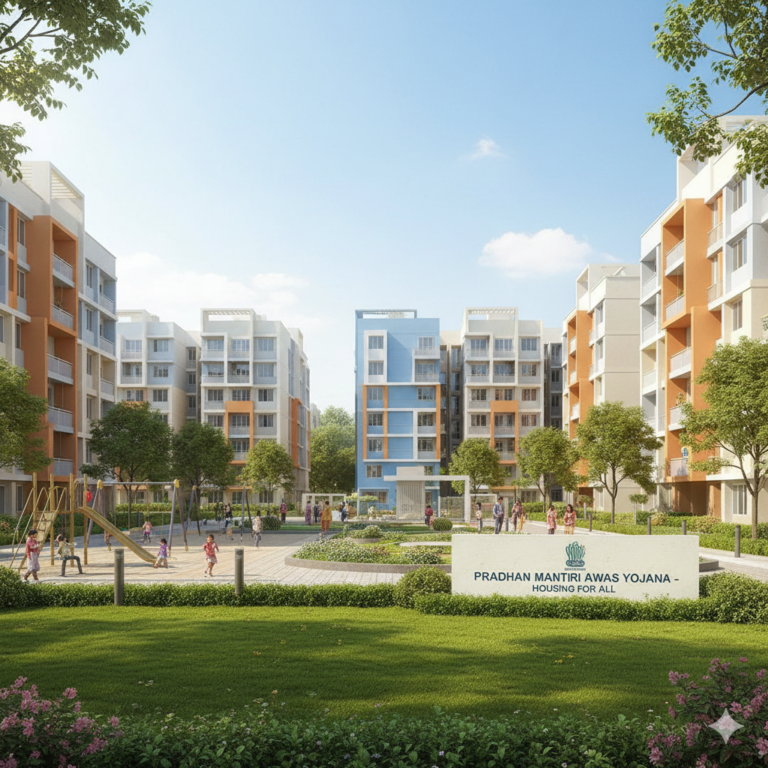
Navigating the journey to homeownership can be overwhelming, especially for those looking to purchase their first property in a competitive market. However, the landscape for Affordable Housing Schemes in India has undergone a significant transformation in 2026, making the dream of owning a home more attainable than ever. With the government’s renewed focus on “Housing for All,” new initiatives like PMAY-U 2.0 are providing substantial financial cushions to young professionals and families. Whether you are searching for budget-friendly flats in Gurgaon or exploring suburban opportunities, understanding these schemes is the first step toward a secure financial future. This guide breaks down the essential insights every first-time buyer needs to capitalize on government-backed incentives and interest subsidies this year.
The Shift Toward Urban Accessibility in 2026
The Indian real estate sector has historically struggled with a gap between premium luxury and mass affordability.
To bridge this, the Government of India launched the second phase of its flagship mission, Pradhan Mantri Awas Yojana – Urban (PMAY-U 2.0), in late 2024, which is now in full swing in 2026. This scheme specifically targets the Economically Weaker Section (EWS), Low-Income Group (LIG), and Middle-Income Group (MIG). According to reports by The Economic Times, the mission aims to support 1 crore urban families over five years. In Haryana, the state government has complemented these efforts with the Haryana Affordable Housing Policy, leading to a surge in organized high-rise developments.
Navigating PMAY-U 2.0 and State Incentives
For a first-time buyer, the primary attraction of Affordable Housing Schemes in India is the Credit Linked Subsidy Scheme (CLSS). Under the updated 2026 guidelines, the Interest Subsidy Scheme (ISS) offers a significant reduction in the effective interest rate of home loans.
1. Understanding Income Categories and Subsidies
Eligibility is strictly defined by annual household income. The EWS category (up to ₹3 lakh) and LIG category (₹3 lakh to ₹6 lakh) can access subsidies that effectively reduce their loan burden by up to ₹2.67 lakh. Furthermore, the MIG-I category (income up to ₹9 lakh) now benefits from a 4% interest subsidy on the first ₹8 lakh of their loan. This financial injection is credited upfront to the loan account, drastically lowering the monthly EMI. When searching for flats in Gurgaon, buyers should specifically look for “PMAY-approved” projects to ensure they can claim these benefits.
2. The Rise of “Smart-Sized” Living
Affordable housing no longer means compromising on quality. The 2026 policy encourages developers to build units with a carpet area of up to 60 sq. m. for LIG and up to 120 sq. m. for MIG. These units are designed for modern urban living, often featuring eco-friendly construction materials and basic community amenities like power backup and 24/7 security. Many developers are now launching dedicated “affordable luxury” flats in Gurgaon that meet these criteria while providing a high standard of living.
3. Legal Protection and Transparency
A critical advantage for first-time buyers today is the mandatory registration under the Haryana Real Estate Regulatory Authority (H-RERA). This ensures that the developer adheres to the promised timelines and quality standards. Additionally, the National Housing Bank (NHB) oversees the subsidy disbursement, ensuring that the process remains transparent and free from middlemen. For those investing in flats in Gurgaon, this regulatory oversight provides much-needed peace of mind.
How Gurgaonfloors Can Help You Navigate Your Purchase
At gurgaonfloors, we understand that the paperwork involved in government schemes can be daunting for first-time buyers. Our expert consultants at gurgaonfloors.in are dedicated to simplifying this process for you. We maintain an updated inventory of the best-valued flats in Gurgaon that qualify under the Affordable Housing Policy 2026.
Our team provides comprehensive support, including:
- Eligibility Assessment: Helping you determine which income bracket you fall into for PMAY-U 2.0.
- Project Comparison: Analyzing different affordable projects in sectors like 92, 102, and Sohna based on construction quality and future appreciation.
- Documentation Assistance: Guiding you through the subsidy application and bank loan process.
- Exclusive Deals: Accessing units in high-demand projects before they are sold out.
Let gurgaonfloors be your trusted partner in turning the complexities of Affordable Housing Schemes in India into a straightforward path to your new home.
Frequently Asked Questions (FAQs)
1. Can I apply for a subsidy if I already own a plot of land?
Yes, under the Beneficiary-Led Construction (BLC) vertical of PMAY, you can receive financial assistance to construct a “pucca” house on your existing land, provided you do not own any other permanent house in India.
2. Are there specific benefits for women in these schemes?
Absolutely. PMAY-U 2.0 mandates that the house must be registered in the name of the female head of the household or in joint names. Many banks also offer a 0.5% lower interest rate for women buying flats in Gurgaon.
3. What is the maximum property price for the affordable housing subsidy?
Currently, the subsidy is typically applicable for properties with a value up to ₹35-45 lakh, though there are ongoing discussions in the 2026 Budget to increase this cap for metro cities to reflect rising market prices.
Add a comment