
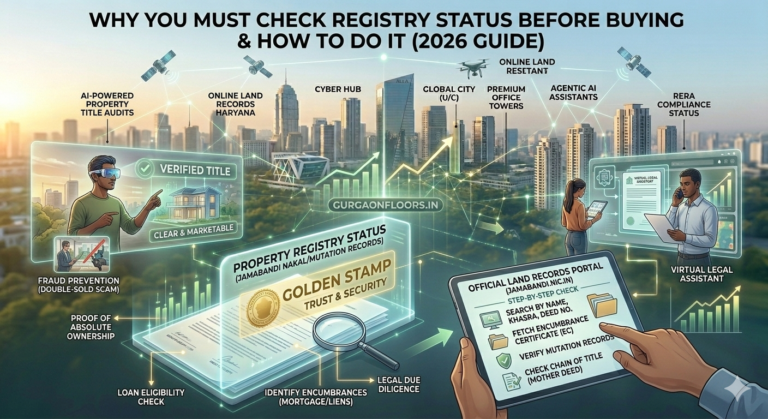
The “Paper Gold” of Real Estate
In the high-velocity real estate market of 2026, a glossy brochure and a signed allotment letter are not enough to make you an owner. The only truth in real estate lies in the government’s record books. Checking property registry status is the process of verifying that the person selling you a property actually has the legal right to do so and that the land isn’t already pledged to a bank or stuck in a family dispute.
With the 2026 updates to India’s digital land record systems, “blind buying” has become a massive risk. Authorities now prioritize digital data over physical papers, meaning if a sale isn’t reflected in the official registry, it effectively doesn’t exist in the eyes of the law. This blog is your shield against fraud, providing a clear roadmap to property title verification in India.
Why Registry Status is Non-Negotiable
Ignoring the registry status is like buying a car without checking the RC (Registration Certificate). Here is what’s at stake:
- Proof of Absolute Ownership: Under the Registration Act of 1908, a property transfer is only legally valid once it is registered with the Sub-Registrar. Without this, you are merely a “possessor,” not an “owner.”
- Loan Eligibility: No Tier-1 bank in 2026 will disburse a home loan without a clear Registry Search Report. They need to ensure their collateral is “clean.”
- Fraud Prevention: Registry checks reveal if a property has been “double-sold”—a common scam where a fraudster sells the same unit to multiple buyers using fake documents.
- Identifying Encumbrances: It tells you if there is an existing mortgage, a court stay order, or unpaid tax liens on the property.
How to Check Property Registry Status (Step-by-Step)
In 2026, most states have digitized their records. Here is how to perform a check, using Gurgaon (Haryana) as the primary example:
Step 1: Use the Official Land Records Portal
For properties in Gurgaon, the Jamabandi Portal is your primary tool.
- Website: [suspicious link removed]
- Action: Navigate to the ‘Property Registration’ tab and select ‘View Registered Deeds.’
Step 2: Search by Specific Criteria
You don’t need to be a tech genius. You can search using:
- Owner Name: To see all properties registered under the seller.
- Khasra/Khewat Number: The specific “Address” of the land in revenue records.
- Deed Number & Date: If the seller has provided a copy of the previous registry.
Step 3: Fetch the Encumbrance Certificate (EC)
The EC is a “financial health report” of the property.
- Form 15: Lists all registered transactions (sales, mortgages) for a specific period (usually 13–30 years).
- Form 16 (Nil EC): The “Gold Standard”—it confirms there are no registered liabilities on the property.
Step 4: Verify Mutation Records
Mutation (or Dakhil Kharij) is the process of updating the local municipal or revenue records with the new owner’s name after the registry. A property is truly “clean” only when the Registry and Mutation match.
The 2026 Property Due Diligence Checklist
| Document to Check | What it Reveals | Where to Find It |
| Mother Deed | The original “root” of ownership (Chain of Title). | Seller’s Records / Sub-Registrar |
| Jamabandi Nakal | Current ownership and land use type. | [suspicious link removed] |
| RERA Registration | Builder’s legal right to sell and project status. | HaryanaRERA.gov.in |
| Occupancy Certificate | Proof that the building is legally habitable. | DTCP / Municipal Corp |
How Gurgaonfloors Secures Your Deal
At gurgaonfloors.in, we treat legal due diligence as the foundation of our service, not an afterthought. We know that checking property registry status can be intimidating for first-time buyers.
- Digital Title Audits: We perform an independent 30-year search on every floor and plot we list, ensuring the “Chain of Documents” is unbroken.
- Liaison with Legal Experts: We partner with top property lawyers in Gurgaon to vet sale agreements, ensuring there are no “hidden clauses” that favor the builder.
- Seamless Mutation Support: Our service doesn’t end at the registry. We assist our clients in the mutation process to ensure their names are correctly reflected in the Municipal Corporation of Gurugram (MCG) records.
FAQs:
1. Can I check the registry status of a flat in a high-rise?
Yes. While individual flats don’t have Khasra numbers, you can search via the “Deed Registration” section using the flat number and society name, or check the builder’s master file on the RERA portal.
2. What if the online records don’t show the latest transaction?
Digital records can sometimes lag by a few weeks. In such cases, visit the local Tehsil office (Sub-Registrar) and request a manual “Search Report” for the last 13 years.
3. Does RERA registration mean the title is clear?
Not necessarily. RERA ensures the project is approved, but the title (ownership of the land) still needs to be verified through the registry records.
4. What is a ‘Title Search Report’?
It is a formal document prepared by a lawyer after investigating the registry records, confirming that the seller has a “Clear and Marketable Title” to the property.
Add a comment