
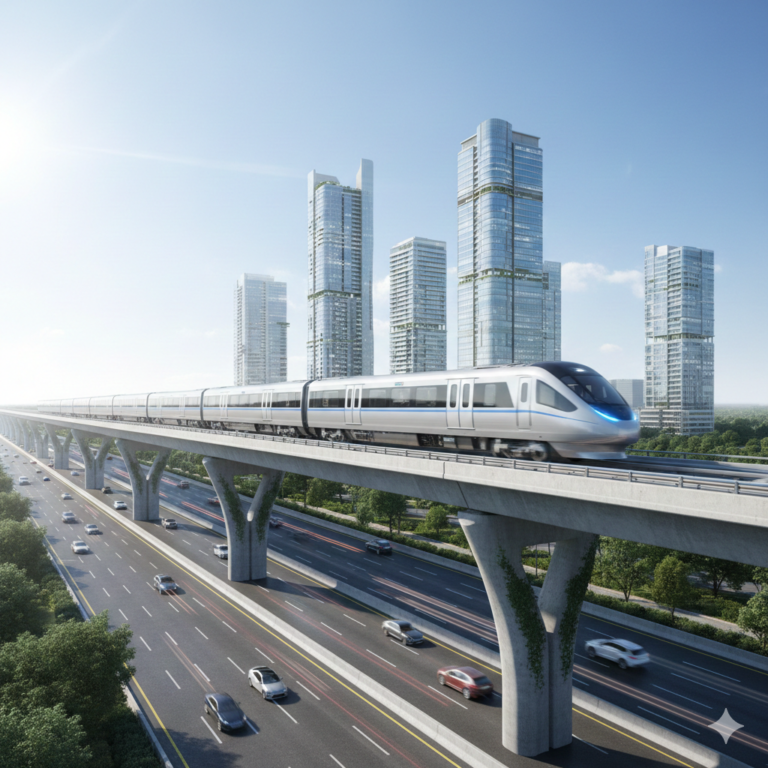
The landscape of the Millennium City is set for a historic transformation as the latest Gurgaon Metro news confirms a massive infrastructure leap. A visionary ₹8,500 crore project is currently on the horizon, introducing a double-decker metro in Gurgaon along the vital Southern Peripheral Road (SPR). This integrated engineering marvel aims to combine a high-speed metro corridor with an elevated road on shared piers, effectively solving the city’s burgeoning traffic woes.
For residents and investors, this is not just a transportation update; it is a signal of massive capital appreciation and urban maturity. By stacking transit systems vertically, Gurugram is following the footsteps of global cities to optimize land use. This blog explores how the upcoming double-decker metro in Gurgaon will reshape connectivity, property values, and the very way we commute between Sector 56 and Pachgaon.
The SPR Infrastructure Shift
The Southern Peripheral Road has long been the backbone of New Gurugram, connecting the Golf Course Extension Road to the Jaipur Highway (NH-48). However, as residential density increased, the need for a more robust transit system became undeniable. According to reports from The Times of India, the Gurugram Metro Rail Limited (GMRL) has proposed this dual-deck structure to prevent “infrastructure clutter” and land wastage.
Historically, building separate flyovers and metro pillars would have choked the road’s width. By integrating them into an ₹8,500 crore unified design, the government is tackling two birds with one stone. This move comes at a time when the Haryana Government is aggressively pushing for “Transit-Oriented Development” (TOD) to make Gurgaon a world-class business hub. Data from the Reserve Bank of India suggests that such heavy infrastructure spending often leads to a multiplier effect on local economic activity, making the SPR corridor the most watched real estate micro-market in 2026.
Understanding the Double-Decker Design
The core of this ₹8,500 crore project lies in its “viaduct stacking” technology. But what does a double-decker metro in Gurgaon actually look like? In simple terms, a single set of heavy-duty pillars will support two levels of transit. The lower deck will serve as an elevated flyover for vehicular traffic, while the upper deck will carry the metro tracks for the Sector 56–Pachgaon line.
Key Benefits of the Integrated Corridor:
- Space Optimization: By using common piers, the project saves nearly 50% of the ground space that would have been occupied by two separate structures. This leaves more room for service lanes and green belts.
- Cost Efficiency: While ₹8,500 crore is a significant investment, combining the projects reduces the overall expenditure on foundations and land acquisition.
- Seamless Connectivity: The 36-km line will feature 28 elevated stations. It will connect established hubs like Golf Course Road with emerging zones like the Manesar Industrial Area and the Dwarka Expressway.
The implementation of a double-decker metro in Gurgaon is expected to mirror successful models seen in cities like Nagpur and Bengaluru. This design ensures that the “Ghata Chowk to Vatika Chowk” stretch remains signal-free for cars while commuters zip through on the metro above. This level of planning is essential for Gurgaon to maintain its status as the “Millennium City.” Furthermore, the integration with the existing Rapid Metro and the upcoming RRTS corridor ensures that the double-decker metro in Gurgaon serves as a vital link in a larger, cohesive transportation grid.
How Gurgaon floors Can Help You
At gurgaonfloors, we understand that infrastructure news like the Gurgaon Metro news directly dictates property market trends. As the SPR prepares for this ₹8,500 crore upgrade, the window for high-yield investment is narrowing. Our consultancy specializes in identifying the most promising residential and commercial opportunities along this new double-decker corridor.
Visit gurgaonfloors.in to access our exclusive “Metro-Impact Analysis” reports. We help you navigate the complexities of RERA-approved projects near the upcoming 28 stations, ensuring you secure assets with the highest potential for rental income and resale value. From luxury 3 BHK flats to premium office spaces, we provide the localized expertise you need to capitalize on the double-decker metro in Gurgaon revolution. Let us guide your next move in Gurugram’s booming real estate market.
FAQs
1. Which stretch of SPR will feature the double-decker metro?
The integrated double-decker viaduct is primarily proposed for the stretch between Ghata Chowk and Vatika Chowk, where the metro line and an elevated road project overlap.
2. How much will the new Gurgaon Metro project cost?
The estimated cost for the 36-km Sector 56 to Pachgaon corridor, which includes the double-decker metro in Gurgaon section, is approximately ₹8,500 crore.
3. How will this project affect real estate prices on SPR?
Infrastructure projects of this scale typically lead to a 15-25% appreciation in property values within the immediate vicinity of the metro stations and improved road corridors.
Add a comment