
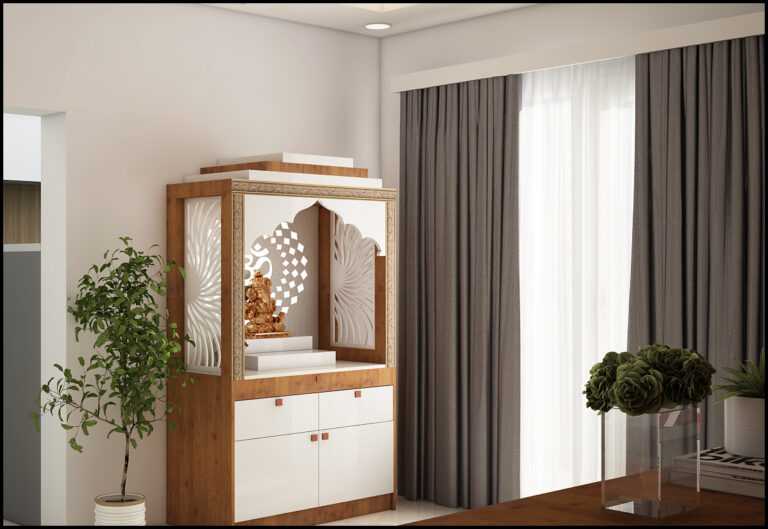
In Indian culture, the Mandir (pooja room) is more than just a place of worship; it is the spiritual engine of the home. It anchors the family’s energy, serving as a sanctuary for prayer, meditation,and positivity.
According to Vastu Shastra, the placement of your mandir aligns your home with cosmic forces. When built correctly, it ensures health, prosperity, and spiritual growth. Here is your complete guide to designing a Vastu-compliant home temple.
The Golden Rule: Best Directions for Your Mandir
The direction of your temple dictates the flow of energy. Use a compass at the center of your
house to determine these zones.
The Most Auspicious: Northeast (Ishan Kona)
● Why: This direction is ruled by Lord Shiva and the planet Jupiter. It represents water,
purity, and harmony.
● Benefit: It receives the first rays of the sun, making it the perfect energy source for the
entire house.
Alternative Directions
● East: Ruled by Lord Indra and the Sun. Placing a mandir here attracts prosperity and
wealth.
● North: Ruled by Kuber (the God of Wealth). This is the “Wealth Corner.”
● Center (Brahmasthan): The core of the home has the strongest energies. A small puja
space here brings good health and prosperity.
Last Resort
● West: Ruled by Varuna. If no other direction is available, the West is an acceptable
practical alternative.
Directions to Avoid
WARNING: Avoid placing the mandir in the South (Yamaraj), Southeast
(Fire/Agni), or Southwest (Rahu/Stability). These placements can disrupt energy
flow, cause financial strain, or lead to health issues
Locations to strictly Avoid
● Inside a basement.
● Under a staircase.
● Directly in front of the main door.
● Next to, above, or below a toilet.
● Inside a bedroom (unless unavoidable; if so, place in the NE corner and ensure feet do
not point toward it while sleeping).
Keep the Sacred Space Organized
Clutter restricts energy. Keep prayer books, incense, and accessories neatly arranged. Clean the mandir daily—even a quick wipe-over works wonders in keeping the area spiritually charged.
Design, Colors, and Materials
● Materials: Wood, Marble, and Granite are best. Avoid glass, acrylic, or animal
skin/leather.
● Roof: A dome or pyramid-shaped ceiling helps concentrate positive energy.
● Colors:
○ Best: White (purity), Light Blue (calm), Orange (power), Red (cloth for idols).
○ Avoid: Black, dark blue, or brown.
● Lighting: The space should be well-lit. Place diyas/lamps in the Southeast or East.
Remedies for Vastu Dosh (Defects)
If your mandir is already built in the “wrong” direction, use these remedies to balance the
energy.
For Southwest Defects
● Place a Rahu Yantra or a glass of water with salt in the SW corner.
● Use a curtain (yellow or white) to segregate the pooja area.
● Install a Vastu pyramid.
For South Defects
● Place a mirror on the South wall to reflect positive energy back.
● Use a yellow carpet or mat in the room.
For Southeast Defects
● Place a copper yantra.
● Keep silver accessories in the mandir.
Final Thought
A Vastu-aligned home mandir is more than a design choice—it’s a daily source of balance and strength. By understanding the flow of energy and adapting your space thoughtfully, you create a spiritual corner that nurtures positivity, invites blessings, and enhances the overall harmony of your home.
Add a comment